
Lifestyle Solar — UX/UI & Web Design
I led a website redesign for Lifestyle Solar, a residential solar energy company, focused on simplifying how homeowners learn about solar solutions and take the next step toward requesting a consultation.
The project included UX research, information architecture, wireframing, responsive UI design, and interactive prototyping. The redesign explored a clearer content hierarchy, more intuitive navigation, and stronger calls to action across desktop and mobile.
Project Summary
Role
Lead UX/UI Designer
Focus
Website Redesign, Lead Generation & User Experience
Methods
UX Audit, Information Architecture, Wireframing, UI Design, Prototyping
Platform
Responsive Web, Figma, Webflow
The Business Problem
Lifestyle Solar needed a website that made residential solar energy easier for homeowners to understand while creating a clearer path toward requesting a consultation. The existing experience presented the company's services but offered opportunities to improve navigation, content organization, and how visitors explored the benefits of going solar.
My Role
I led the UX/UI redesign, reviewing the existing website, developing the information architecture, exploring visual directions, and creating responsive designs and interactive prototypes in Figma. I also supported the initial implementation in Webflow, translating the design direction into a live first phase while the broader redesign remained in development.
The Original Experience
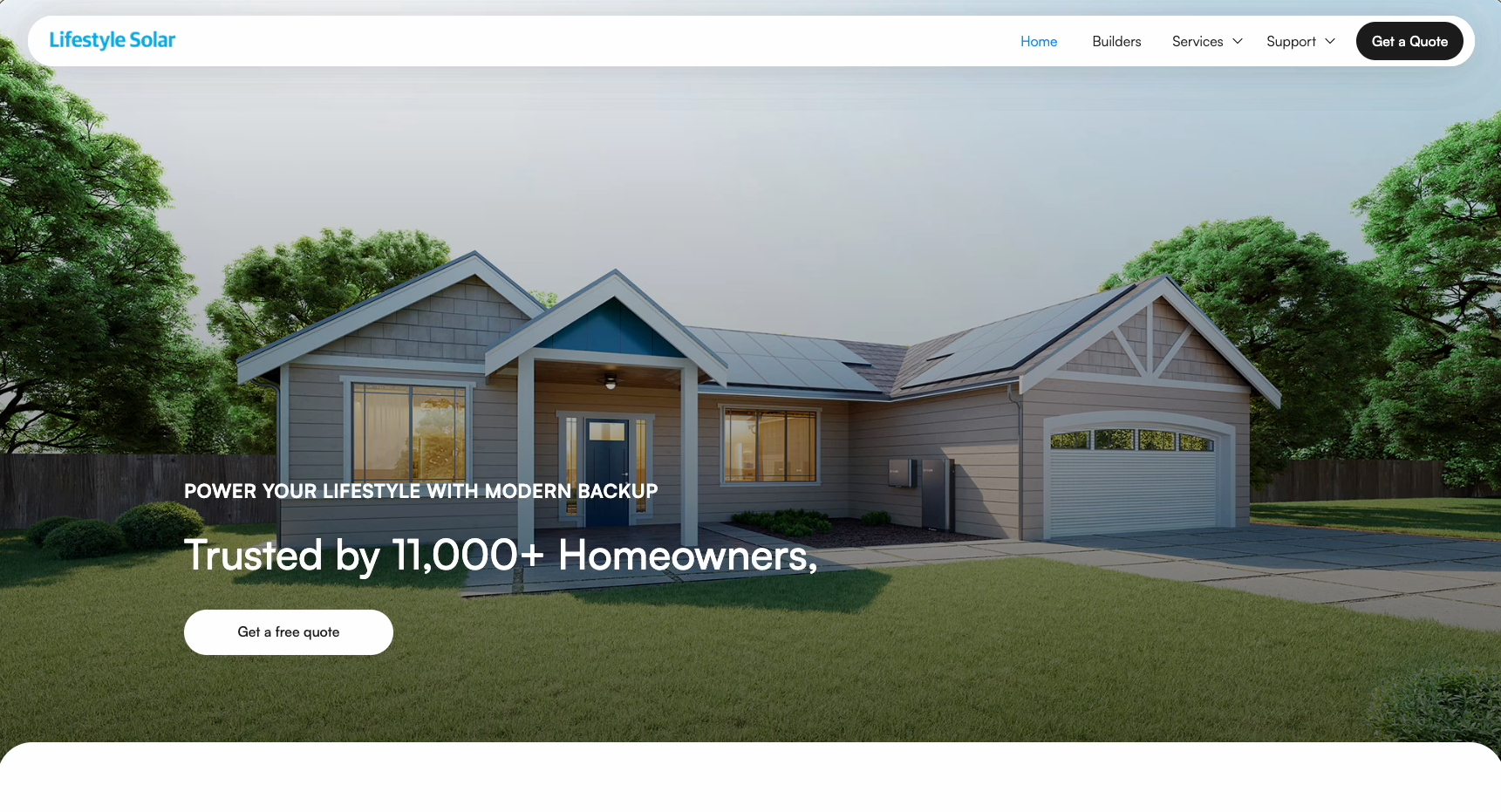
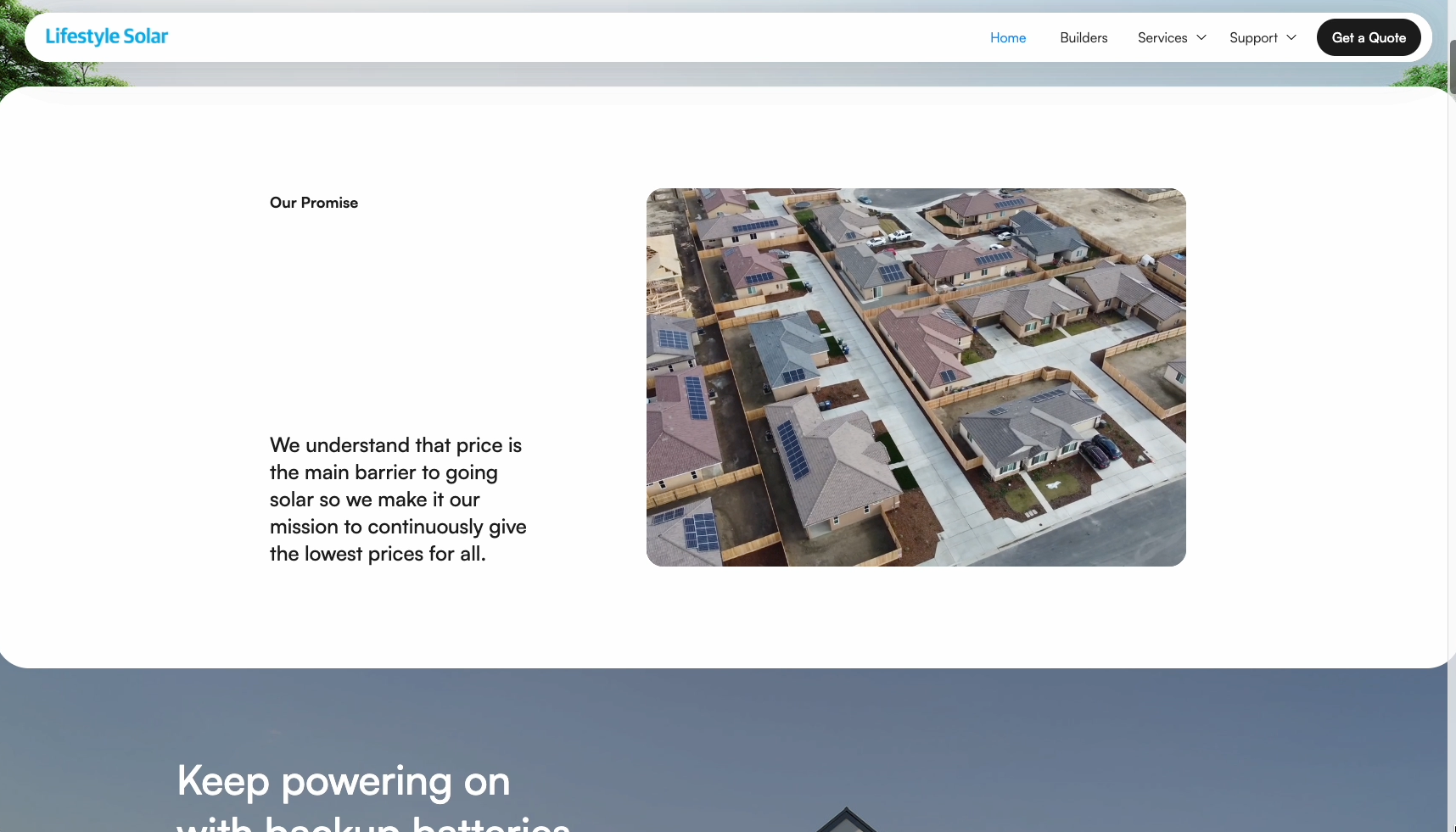
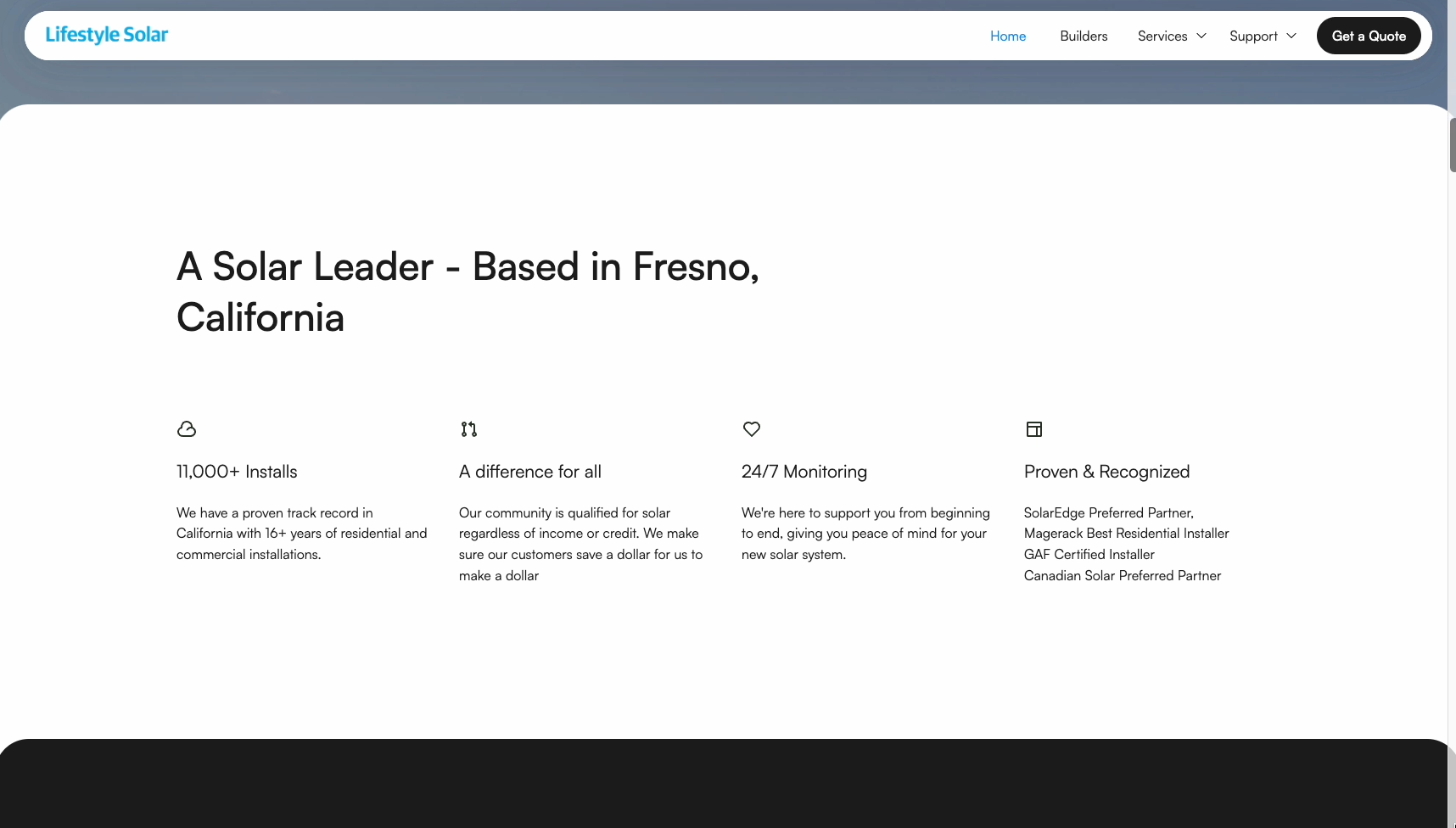
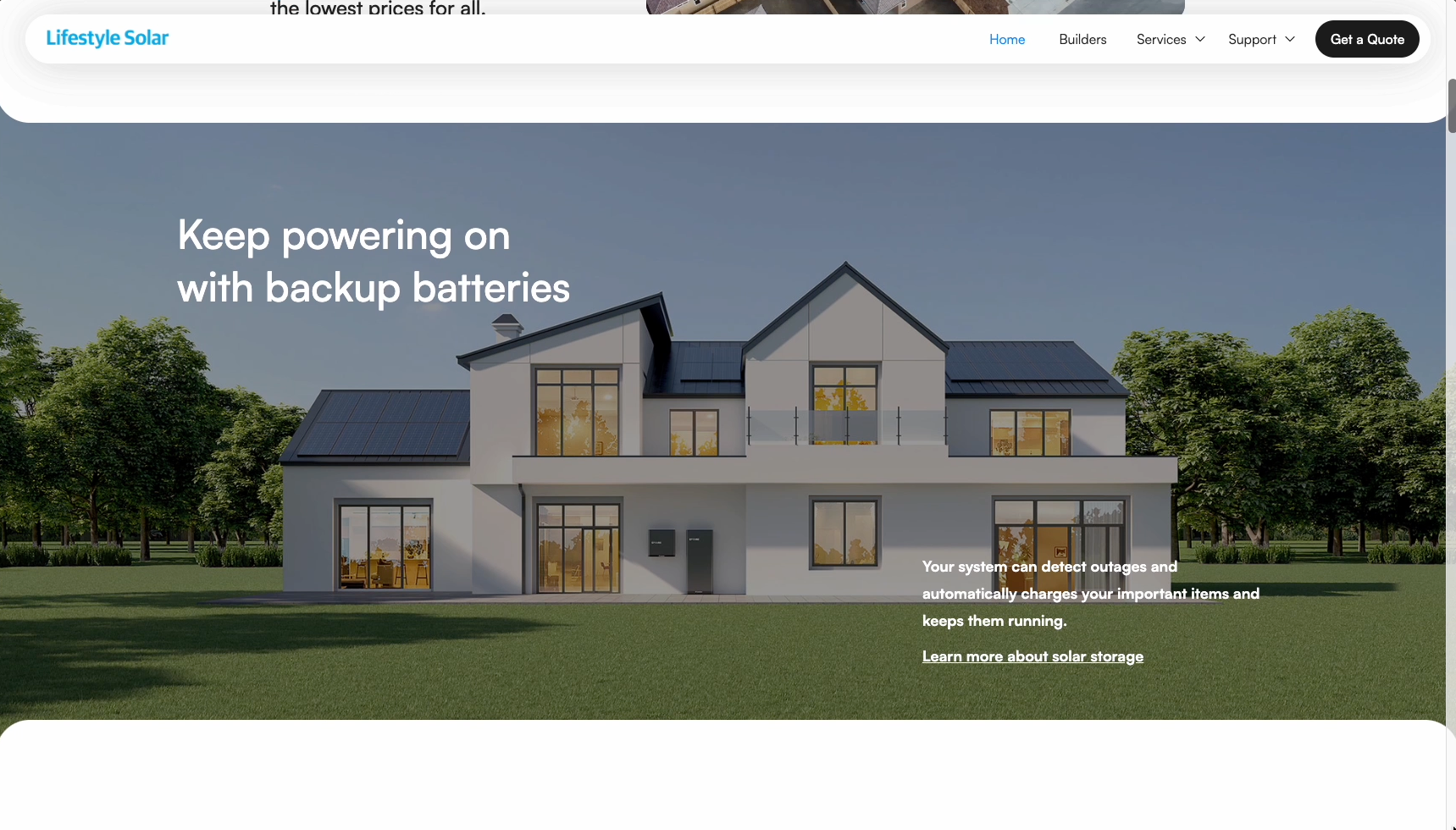
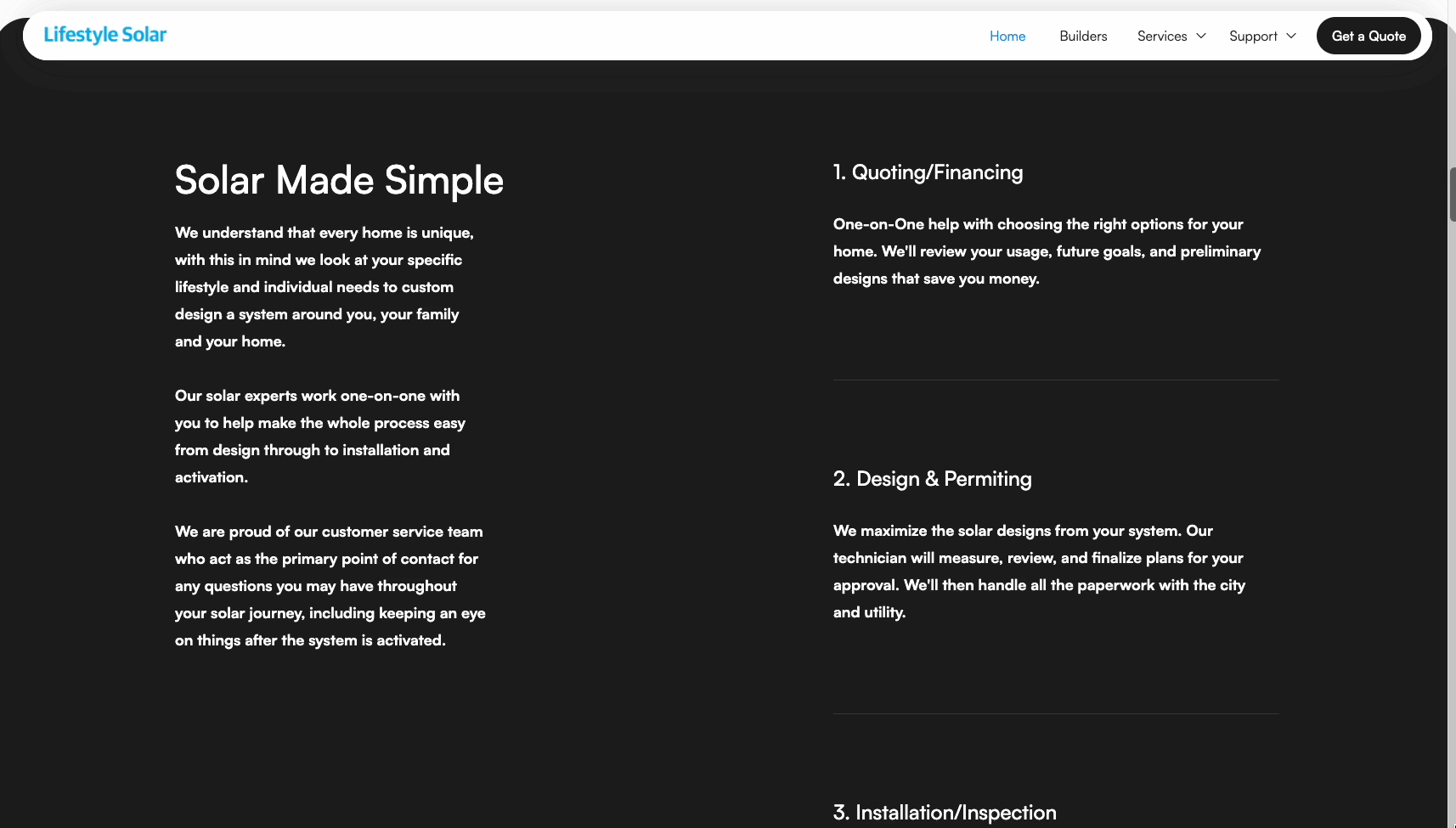
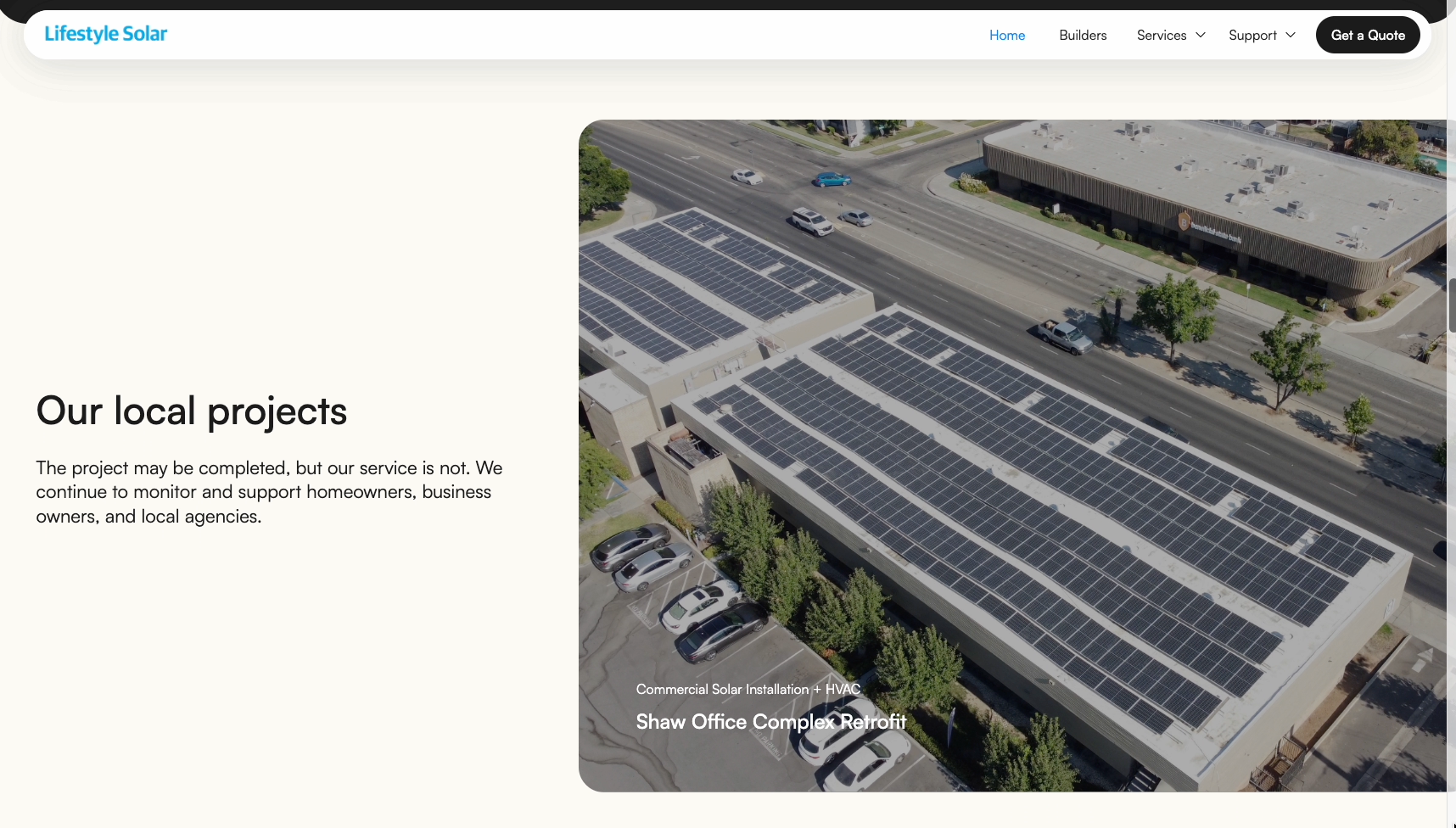
Before beginning the redesign, I reviewed Lifestyle Solar's existing website to identify opportunities to improve navigation, information hierarchy, and the path toward requesting a solar consultation. These screenshots show the original experience and establish the starting point for the redesign.
Strategy & Research
I reviewed Lifestyle Solar's existing website to identify opportunities to simplify navigation, improve content hierarchy, and make residential solar information more accessible to homeowners.
The review helped establish a clearer information architecture, organizing the experience around solar benefits, available solutions, the installation process, and consultation opportunities.
These priorities guided the redesign, connecting educational content with clearer pathways for visitors to explore their options and take the next step.

Simplify Solar Education
Present solar benefits, solutions, and installation information in a way that's easier for homeowners to understand without overwhelming them with technical details.
Improve Navigation & Discovery
Establish a clearer content structure that helps visitors find relevant services, understand the company's offerings, and explore the solar installation journey.
Create Clearer Conversion Paths
Make consultation requests more accessible through consistent calls to action and a more intuitive journey from learning about solar to contacting the company.
Design Decisions
Visual Exploration & Design Direction
Explored multiple visual directions to establish a more modern, approachable identity for Lifestyle Solar's digital experience. The selected direction combined residential photography, clear typography, and a simplified visual hierarchy to make solar energy feel more accessible to homeowners.
Simplified Content & Page Structure
organized the website around clearer service information, educational content, pricing comparisons, and consistent calls to action. The redesigned pages help homeowners explore solar solutions, understand their options, and move toward requesting a consultation.
Responsive Mobile Experience
Adapted the experience for smaller screens, prioritizing readable content, simplified navigation, and accessible consultation forms. The mobile layouts maintain the desktop design's visual consistency while making it easier for homeowners to explore services and take action on their phones.
Interaction & Prototyping
The final interactive prototype brings together simplified navigation, educational content, and clearer consultation pathways across the redesigned website. Built in Figma, it demonstrates the proposed experience through key pages, transitions, and interactions, showing how homeowners can explore solar solutions and move toward requesting a quote.
Outcome & Takeaways
The project established a cohesive UX/UI direction for Lifestyle Solar, bringing together simplified navigation, clearer solar education, and more accessible consultation pathways across desktop and mobile.
An initial phase was implemented in Webflow, while the broader redesign was delivered through high-fidelity designs and an interactive Figma prototype.
Key Takeaways
Simplifying Complex Information
Organizing technical solar information around homeowners' needs helped make the experience more approachable and easier to navigate.
Connecting UX to Business Goals
Clearer content hierarchy and consistent calls to action created a more intentional journey from learning about solar to requesting a consultation.
Designing for Implementation
Exploring responsive layouts and interactions early helped establish a consistent design direction that could guide future development.